Footwork First
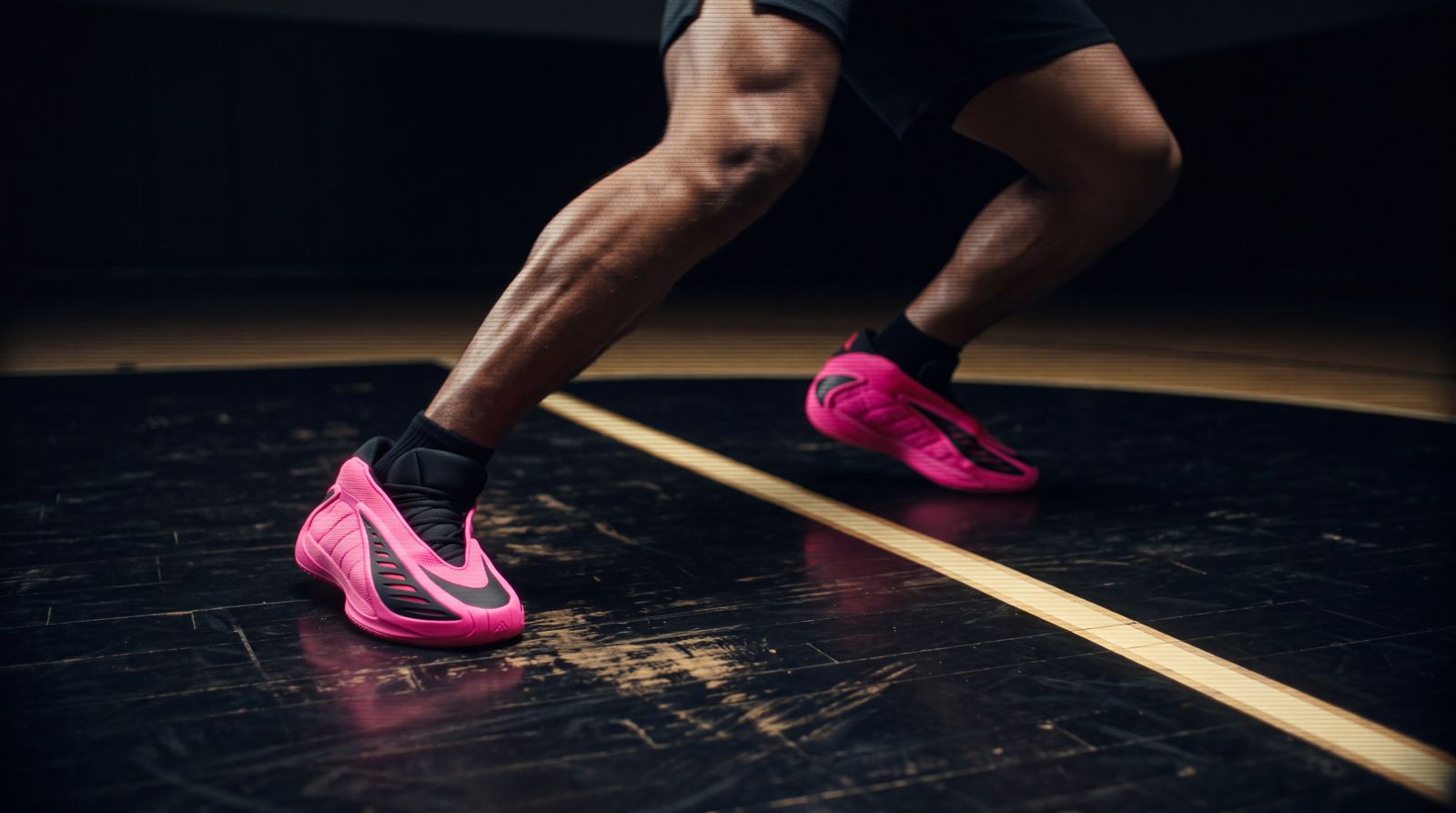
Everything is built from the floor up.
Before we add a move, we fix how you arrive, how you stop, and which foot you land on. Retrain the habit, not the highlight. Balance is the first skill and the last one to leave you.
The Hicks Standard
A workout that looks good on video is easy to build. A player a coach trusts at the end of a close game is not. Everything below exists to close that gap.
I coach at three levels at once: private development, program practice, and live games where I make the substitution. That vantage point is the method. I see exactly which rep transfers and which one is decoration.
So every session has a clock, a defender, a score, and a consequence. We film it. We review it together. We adjust the plan in writing, and we re-test.
If it doesn't hold up live, we don't train it.
The Hicks Standard
Pillar 01 of 05
Five pillars. Every session touches at least three of them. Nothing here is optional.
Everything is built from the floor up.
Before we add a move, we fix how you arrive, how you stop, and which foot you land on. Retrain the habit, not the highlight. Balance is the first skill and the last one to leave you.
Skill without speed of decision is decoration.
Every rep gets a defender, a clock, and a consequence. We train reads, not routines. The fastest player on the floor is the one who already knows what they are going to do.
You cannot get game-ready against a cone.
Every session ends in live competition, scored, with the film running. Fighters spar. Players play. What holds up under contact is yours. What breaks gets fixed on Tuesday.
Progress is a number, not a feeling.
You get a written development plan with three priorities and measurable benchmarks. We review your game film together, then we re-test on a schedule. You will know exactly where you stand.
Coaches ask about your character before your handle.
We coach body language, communication, the weight room, and the report card, because those are the things that get you on the floor and keep you there. Talent gets you looked at. Habits keep you playing.
What a session looks like
Luck is when preparation meets opportunity.